



One of the biggest questions beginners ask when starting a tech career is:
“Should I learn frontend or backend development?”
Web development is one of the most in-demand digital skills globally, and both frontend and backend developers play critical roles in building modern websites and applications. However, the two paths involve different technologies, responsibilities, and career opportunities.
If you are planning to learn coding in Nigeria or anywhere in the world, understanding the difference between frontend and backend development will help you choose the right path based on your interests, strengths, and career goals.
In this guide, you will learn:
- What frontend development is
- What backend development is
- Key differences between the two fields
- Skills required
- Programming languages to learn
- Salary and career opportunities
- Which is easier for beginners
- Which path is best for you in 2026
Modern web development increasingly overlaps between frontend and backend responsibilities, especially with frameworks like React, Next.js, Node.js, and API-driven architectures.
What is Frontend Development?
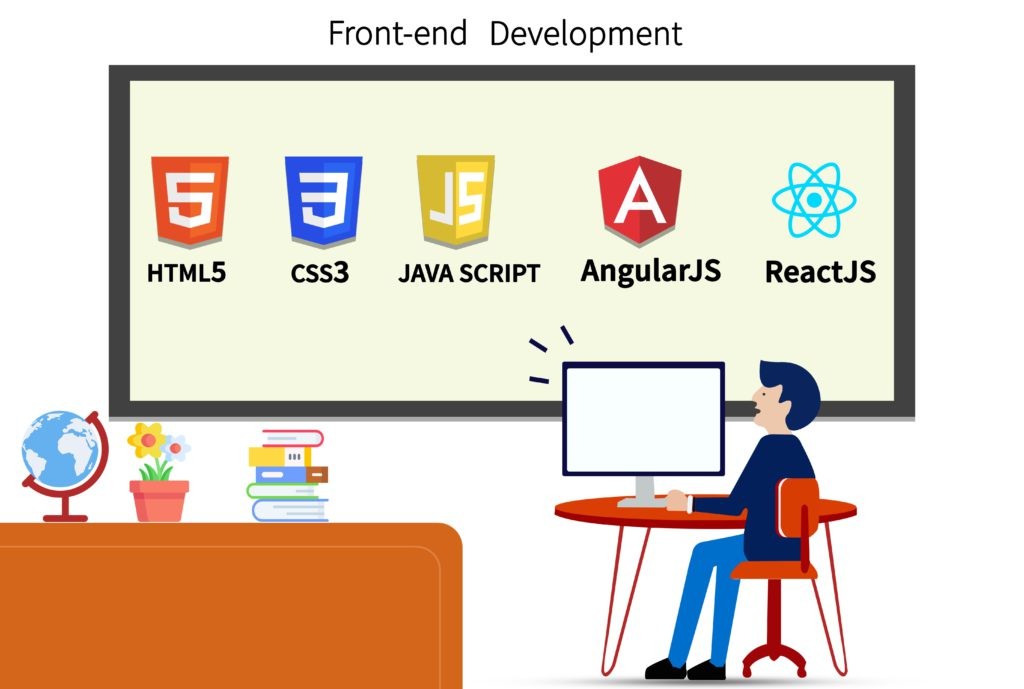
Frontend development focuses on everything users see and interact with directly on a website or application.
Frontend developers build:
- layouts
- navigation menus
- buttons
- forms
- animations
- responsive interfaces
- dashboards
- landing pages
In simple terms:
👉 Frontend is the visual side of a website. Visit our website
Whenever you:
- Click a button
- fill a form
- scroll through a website
- Use a navigation menu
You are interacting with the frontend.
Frontend development mainly uses:
- HTML
- CSS
- JavaScript
Modern frontend development also includes frameworks and tools like:
- React
- Next.js
- Vue.js
- Tailwind CSS
- TypeScript
Frontend developers focus heavily on:
- user experience (UX)
- responsiveness
- accessibility
- website performance
- interface design
Frontend development handles the user-facing interface while modern frontend frameworks increasingly emphasize performance, responsiveness, accessibility, and SEO.
What is Backend Development?
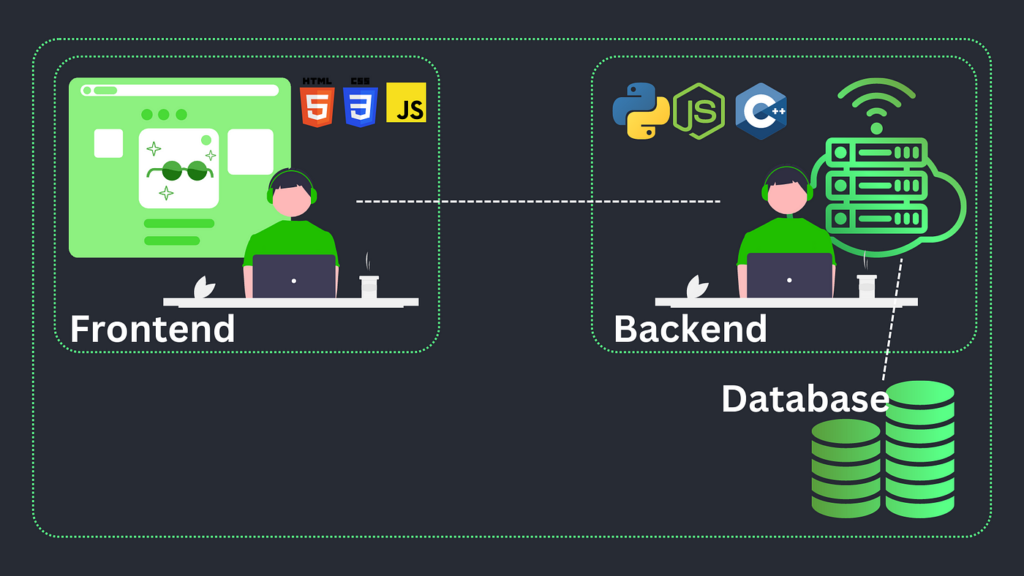
Backend development powers everything happening behind the scenes of a website or application.
Backend developers work on:
- servers
- databases
- APIs
- authentication systems
- business logic
- security
- data processing
In simple terms:
👉 The backend is the engine that makes applications function properly.
For example:
When a user logs into a website, the
- frontend displays the login form
- backend verifies credentials
- backend retrieves user data
- backend communicates with the database
Backend developers ensure applications are:
- secure
- scalable
- reliable
- fast
Popular backend technologies include:
- PHP
- Laravel
- Node.js
- Python
- Django
- Java
- MySQL
- PostgreSQL
- MongoDB
Backend development focuses heavily on APIs, databases, scalability, business logic, and server-side systems.
Frontend vs Backend Development: Major Differences
| Feature | Frontend Development | Backend Development |
|---|---|---|
| Main Focus | User interface | Server-side logic |
| Visible to Users | Yes | No |
| Main Goal | User experience | Data processing |
| Core Languages | HTML, CSS, JavaScript | PHP, Python, Java, Node.js |
| Handles Databases | Rarely | Yes |
| Handles APIs | Consumes APIs | Builds APIs |
| Works With | Design/UI | Servers/Data |
| Primary Concern | Responsiveness & UX | Security & Scalability |
Frontend Developer Skills You Need
To become a frontend developer, you should learn:
1. HTML
HTML structures web pages.
It creates:
- headings
- paragraphs
- images
- forms
- buttons
2. CSS
CSS controls:
- colors
- layouts
- responsiveness
- animations
- spacing
3. JavaScript
JavaScript adds interactivity to websites.
Examples:
- sliders
- dynamic content
- popups
- validations
- animations
4. Frontend Frameworks
Modern frontend developers should learn:
- React
- Next.js
- Vue.js
5. Responsive Design
Websites must work properly on:
- mobile devices
- tablets
- desktops
6. Version Control
Frontend developers should learn:
- Git
- GitHub
Backend Developer Skills You Need
Backend developers require different technical skills.
1. Programming Languages
Popular backend languages include:
- PHP
- Python
- JavaScript (Node.js)
- Java
- Go
2. Databases
Backend developers work with:
- MySQL
- PostgreSQL
- MongoDB
3. APIs
Backend systems communicate using:
- REST APIs
- GraphQL APIs
4. Authentication & Security
Backend developers handle:
- login systems
- authorization
- encryption
- security protection
5. Server Management
Backend developers often work with:
- hosting servers
- cloud services
- deployment pipelines
Modern backend development increasingly emphasizes cloud systems, APIs, scalability, observability, and security architecture.
Which is Easier for Beginners?
Most beginners find frontend development easier to start because:
- you see visual results quickly
- it feels interactive
- it requires less server configuration initially
Frontend development is often more beginner-friendly for visual learners.
Backend development can feel more technical because it involves:
- databases
- server logic
- APIs
- authentication systems
However:
backend developers often enjoy solving logical and architectural problems.
Which Pays More?
Both frontend and backend developers are highly valuable.
In many companies:
- Salaries depend on experience and specialization
- Backend developers may earn slightly more in some enterprise environments
- Frontend specialists with strong React/Next.js expertise are also highly paid
Full-stack developers who understand both frontend and backend are especially valuable in modern software companies.
Which Has More Job Opportunities?
Both fields have excellent demand.
Frontend opportunities include:
- UI developer
- React developer
- Web designer
- Frontend engineer
Backend opportunities include:
- Backend engineer
- API developer
- Database engineer
- Cloud developer
In Nigeria and globally, companies constantly hire both frontend and backend developers.
Should You Learn Frontend or Backend First?
For most beginners:
✅ Start with the frontend.
Why?
Because frontend helps you:
- understand how websites work
- build visible projects quickly
- stay motivated
Recommended beginner roadmap:
- HTML
- CSS
- JavaScript
- React/Next.js
- Backend development
This path gives you a strong foundation before moving into backend systems.
What is Full-Stack Development?
A full-stack developer can handle:
- frontend development
- backend development
- databases
- APIs
Full-stack developers can build complete applications independently.
Many developers eventually become full-stack engineers after learning both frontend and backend technologies.
Frontend vs Backend: Which is Better in 2026?
The answer depends on your interests.
Choose frontend if you enjoy:
- creativity
- design
- animations
- user experience
- visual interfaces
Choose backend if you enjoy:
- problem solving
- databases
- server logic
- security
- system architecture
Modern development increasingly blends frontend and backend responsibilities, especially with AI-assisted tools and full-stack frameworks.
Can AI Replace Frontend or Backend Developers?
Artificial intelligence is changing software development, but it is not replacing developers completely.
AI tools now help with:
- code generation
- debugging
- UI creation
- automation
However, developers are still needed for:
- architecture decisions
- problem solving
- user experience
- system design
- security
- scalability
Many developers believe AI is becoming a productivity assistant rather than a replacement.
Best Technologies to Learn in 2026
Frontend Technologies
- HTML
- CSS
- JavaScript
- React
- Next.js
- TypeScript
- Tailwind CSS
Backend Technologies
- Node.js
- PHP
- Laravel
- Python
- Django
- PostgreSQL
- MongoDB
How to Start Learning Web Development in Nigeria
If you are starting from scratch:
- learn consistently
- practice daily
- build projects
- join tech communities
- work on real-world applications
Hands-on practical experience matters more than theory alone.
Learn Frontend and Backend Development with Bridgekode Technology
If you want practical web development training in Lagos, Bridgekode Technology provides hands-on training for beginners and aspiring developers.
Training programs include:
- Frontend Development
- Backend Development
- Full-Stack Development
- UI/UX Design
- Cybersecurity
- Graphics Design
- Data Analysis
Students learn through practical projects and real-world applications designed to prepare them for modern tech careers.
Final Thoughts
Frontend and backend development are both excellent career paths with strong demand in Nigeria and worldwide.
There is no universally “better” option.
The best choice depends on:
- Your interests
- Your learning style
- Your career goals
If you enjoy visuals and user interfaces, the frontend may suit you better.
If you enjoy logic, systems, and databases, backend may be the right path.
Over time, many developers learn both and become full-stack engineers.
The most important thing is:
✅ start learning
✅ build projects
✅ practice consistently
✅ Stay updated with technology trends
The technology industry continues to grow rapidly, and skilled developers remain highly valuable in today’s digital economy.
Frequently Asked Questions (FAQ)
Is frontend easier than backend?
Frontend is often easier for beginners because you can see visual results quickly.
Can I learn backend without frontend?
Yes, but learning frontend first helps you understand how web applications work overall.
Which is better for freelancing?
Both are good, but frontend developers often start freelancing faster because simple websites are easier to build for clients.
Can one person learn both frontend and backend?
Yes. That is called full-stack development.
Which programming language is best for beginners?
JavaScript is highly recommended because it works for both frontend and backend development.